Budget Dining Room Decor Ideas That Look Pulled Together
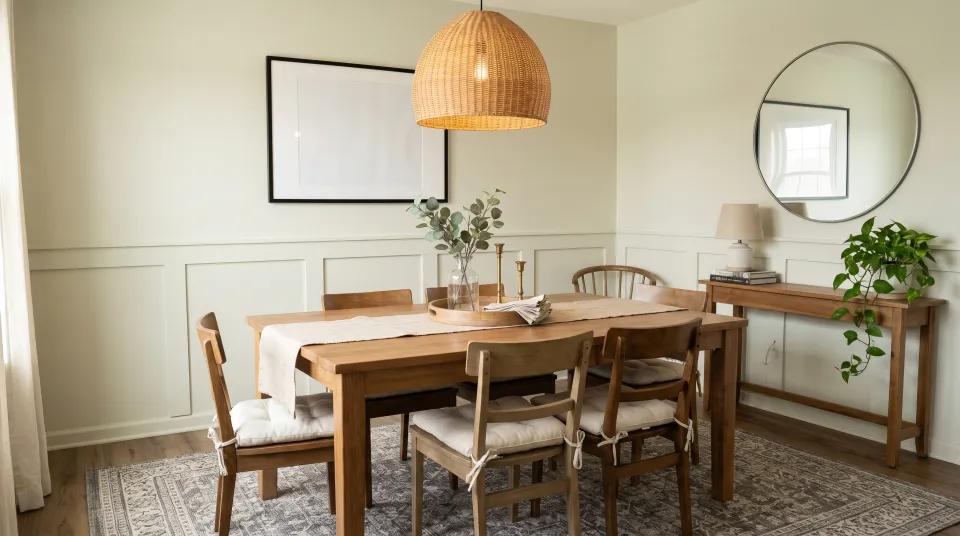
Your dining room has a table, some chairs, and maybe a bare wall that never got finished. It works, but it doesn’t feel like a room you chose on purpose. These budget dining room decor ideas focus on the few changes that make the biggest visual difference, so you can skip a full furniture replacement.
This post may contain affiliate links. We may earn a small commission at no extra cost to you. Read our disclosure.
Your dining room has a table, some chairs, and maybe a bare wall that never got finished. It works, but it doesn’t feel like a room you chose on purpose. These budget dining room decor ideas focus on the few changes that make the biggest visual difference, so you can skip a full furniture replacement.
The trick is knowing where to spend. A dining room looks pulled together when the lighting, the floor, the walls, and the table all feel like they belong to the same room. You don’t need to change all four. Often, two or three small upgrades are enough.
Start With What You Already Own
Before you shop, take a look at what’s already in the room. Stand in the doorway and notice what bothers you most. Is the room too dark? Too plain? Does the table look lost on the floor?
That one answer tells you where your budget should go first. A few quick checks help:
Do the chairs and table clash? Mismatched wood tones are fine if one other element ties them together, like a rug or cushions in a shared color.
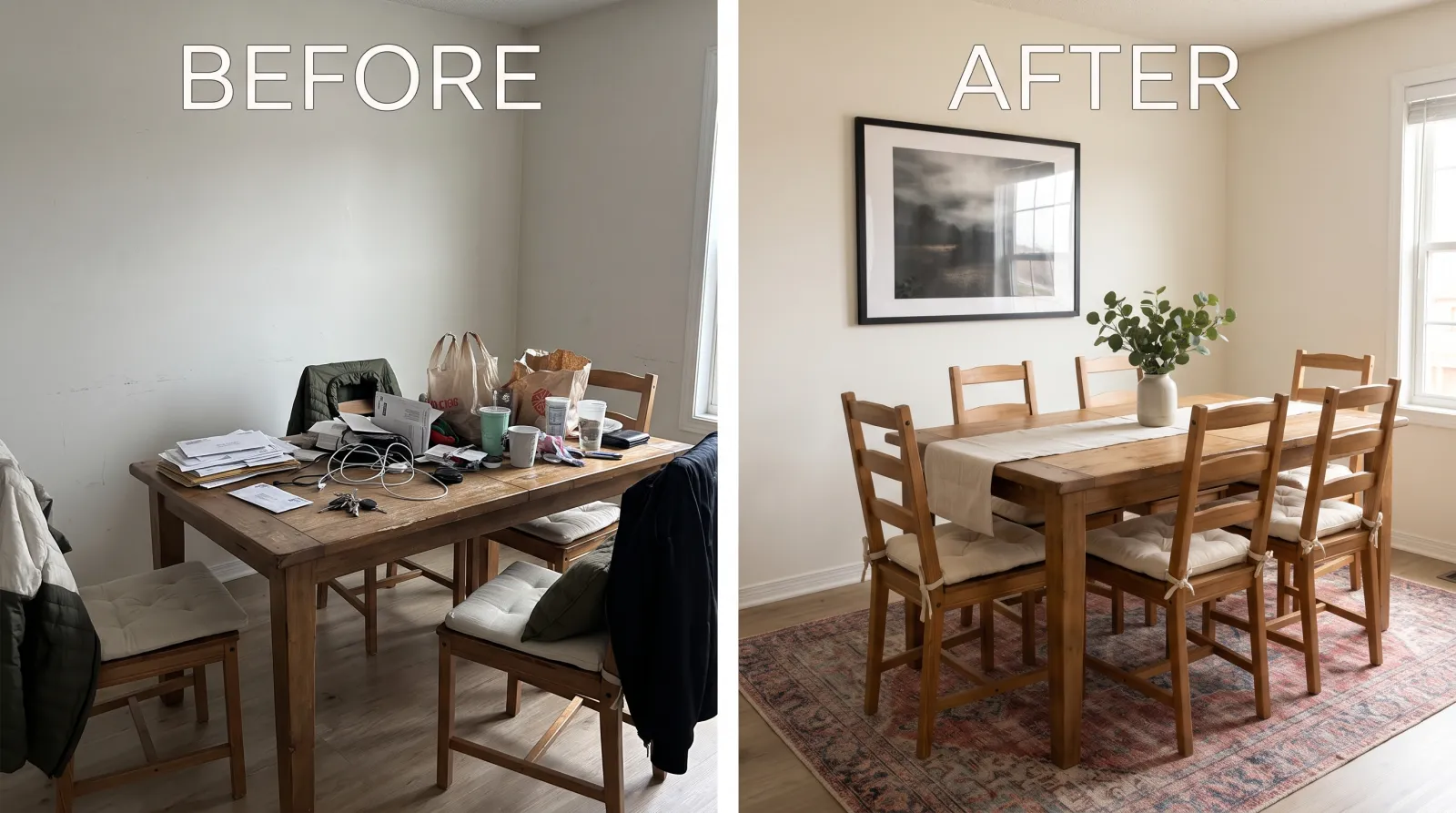
Is anything cluttered? Clearing mail, chargers, and extra items off the table and sideboard costs nothing and changes the room right away.
Which wall do you see first? That’s the one worth styling.
Pick a Simple Color Palette
A tight palette is the cheapest way to make a room look planned. Choose two or three colors and repeat them in small doses: one neutral, one softer accent, and one deeper tone.
If your table and chairs are wood, you might pair warm white walls with sage green and a black or dark bronze accent. If your furniture is white or painted, you can lean on natural textures like linen, rattan, and wood to add warmth.
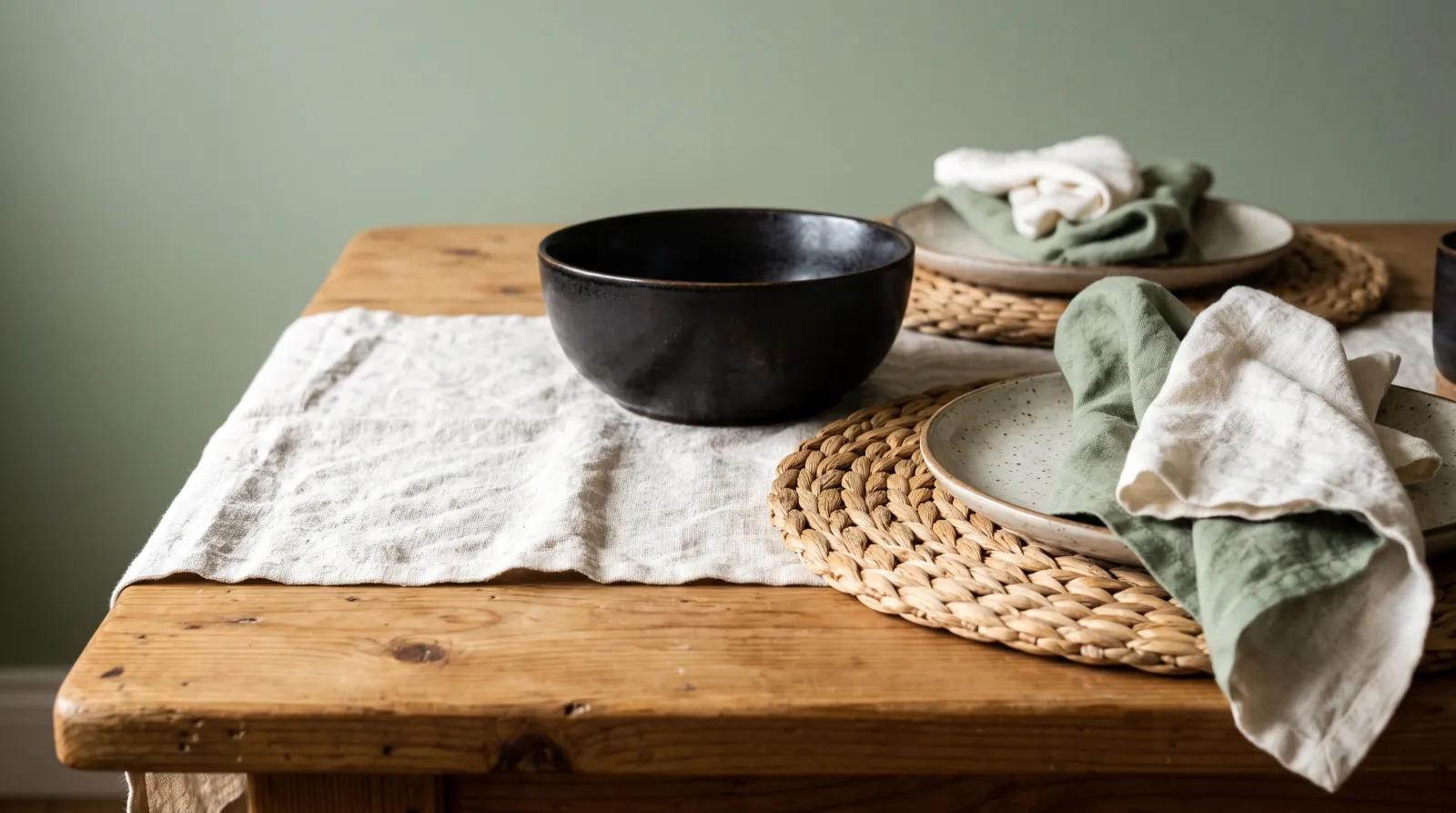
Repeating a color matters more than the color itself. When the same shade shows up in a rug, a vase, and a piece of art, the eye reads the room as cohesive.
Upgrade the Lighting First
Lighting is one of the highest-impact changes you can make in a dining room, and it’s often the most overlooked. Many builder-grade fixtures are small, flat, and cast harsh light.
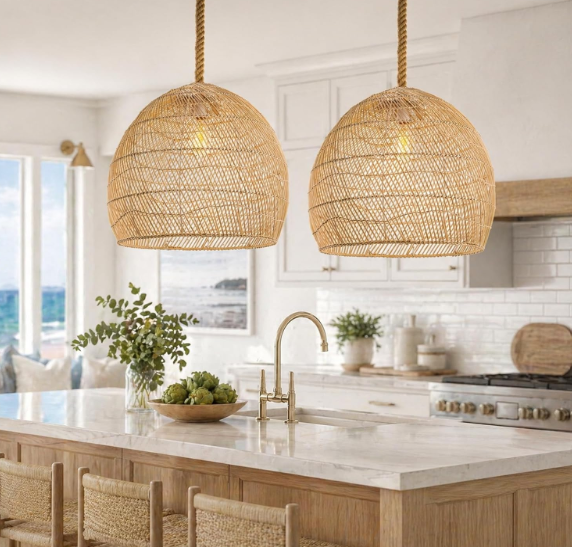
A larger pendant or chandelier gives the table a clear focal point. As a common design guideline, the bottom of a fixture hangs about 30 to 36 inches above the tabletop, though ceiling height and fixture size can change that. A fixture that’s roughly one-half to two-thirds the width of the table usually looks proportionate.
If you rent and can’t swap a fixture, there are workarounds:
Plug-in wall sconces hang from a hook and plug into an outlet, with no wiring.
A floor or table lamp on the sideboard adds a softer glow for evening meals.
Warm-toned bulbs make a room feel more inviting than cool white ones.
If you want a no-wiring option, a plug-in sconce with a fabric shade is worth considering. It adds soft light to a bare wall and can be taken with you when you move. Check the cord length first so it reaches the outlet without a visible dangle.
👉 Add instant warmth to your dining room with a Woven Rattan Plug-In Pendant Light
Ground the Table With a Rug
An area rug defines the dining space and makes the table look anchored, especially in open-plan homes. It also softens sound in rooms with hard floors.
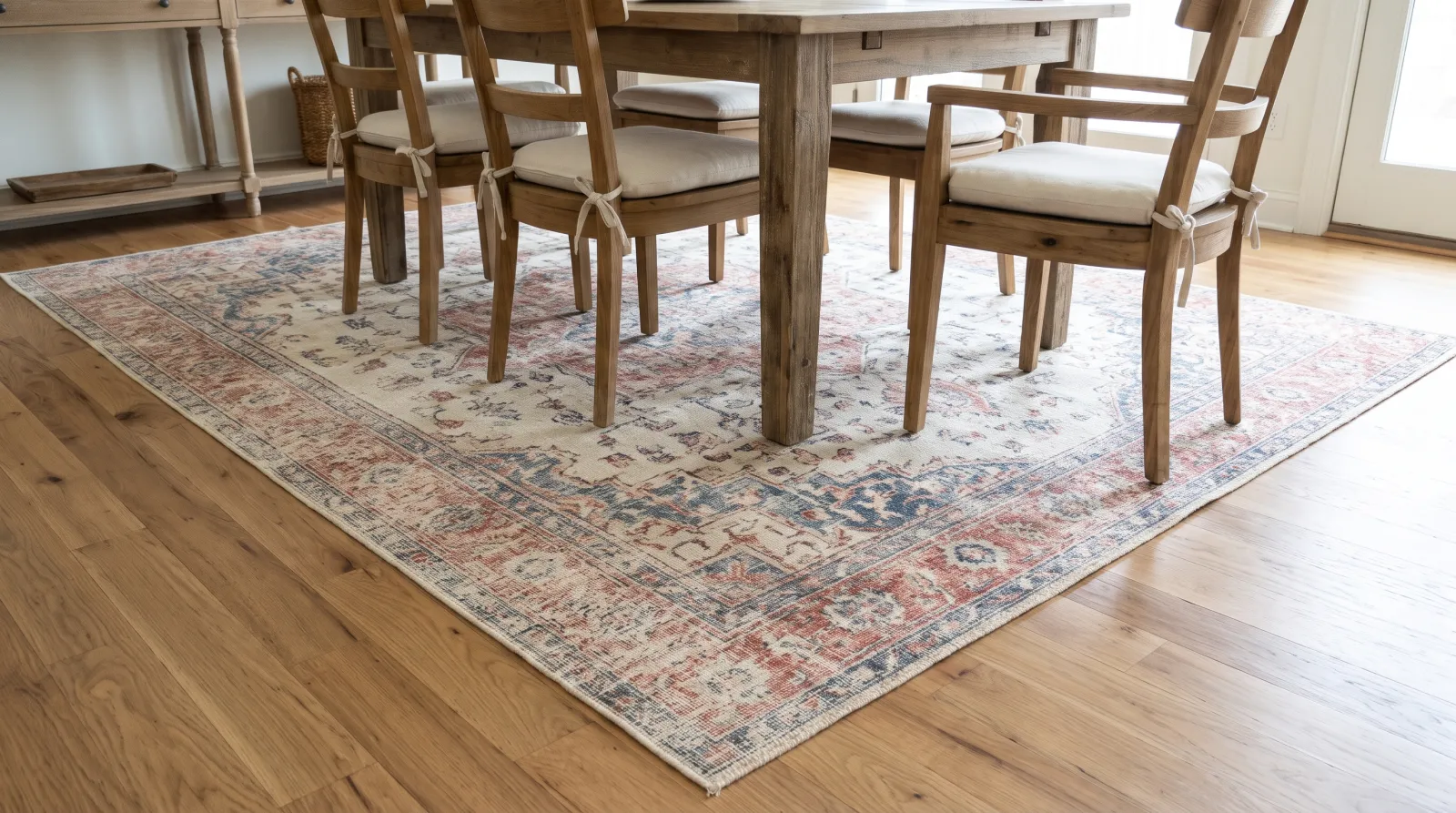
What size rug goes under a dining table?
The rug should extend about 24 inches past each edge of the table, so chairs stay on the rug when pulled out. For a 36 by 72 inch table, that means a rug of roughly 8 by 10 feet in most cases. If a rug is too small, the chair legs catch on the edge, which looks and feels awkward.
Material matters in a room where people eat. A low-pile or flat-woven rug is easier to vacuum and doesn’t trap crumbs the way a thick shag does. Rugs made from washable or stain-resistant fibers are a practical choice if you have kids or pets. Patterns and mid-tone colors also hide small spills better than solid light colors.
Upgrade your dining space with the Ruggable Flatwoven Washable Rug Collection
Add Warmth With Table Linens and Chair Details
The table and chairs are the center of the room, so small changes here show up quickly.
A table runner adds color or texture without covering the whole table. Linen, cotton, and woven jute are common, inexpensive choices.
Chair cushions soften hard seats and bring in your accent color. Look for ties or non-slip backing so they stay put.
Slipcovers can refresh worn or outdated chairs for much less than new ones. Measure your chair backs before buying, because fit varies a lot.
Cloth napkins feel more intentional than paper, and a set can be used for years.
If your table is scratched or dated, a simple tablecloth hides the damage for the price of a few yards of fabric. A wipeable vinyl or coated cotton version is helpful if you eat there daily.
Style the Table So You Can Still Eat There
A centerpiece should look good without getting in the way of dinner. Keep it low enough to see over, or narrow enough to leave room for plates.
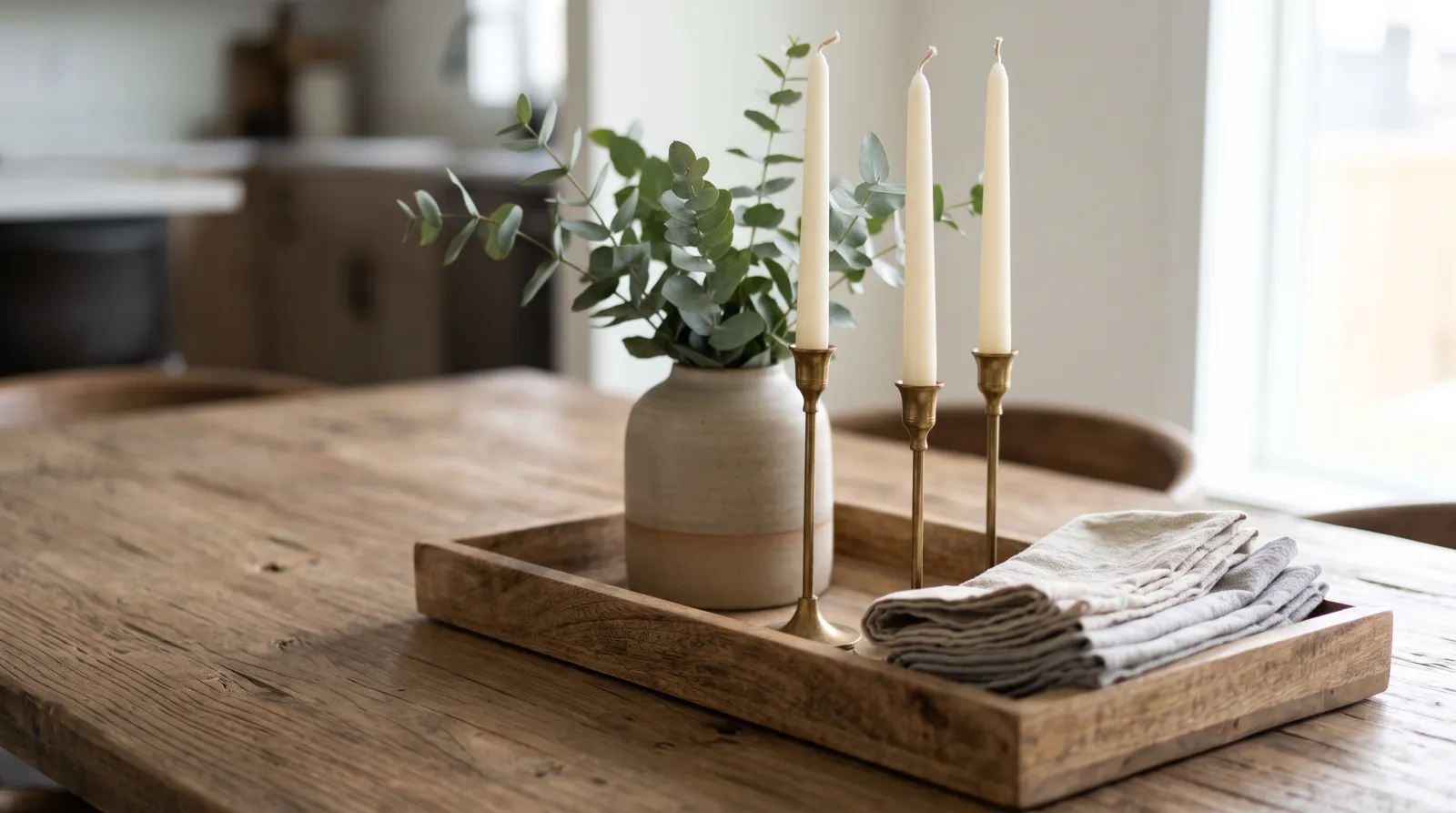
A simple formula works well: one container, one natural element, and one small accent. For example:
A shallow wooden tray or bowl
A few stems of greenery, eucalyptus, or faux florals
A pair of taper candles or a small candle holder
Faux stems are a budget-friendly option because they last, and a few well-chosen ones can look convincing in a simple vase. If you use real flowers, grocery-store bunches in a plain glass vase work just as well.
When you host, you can move the centerpiece to the sideboard and keep the table clear. For everyday use, a tray also corrals salt, pepper, and napkins so the table doesn’t feel cluttered.
Make the Walls Do More
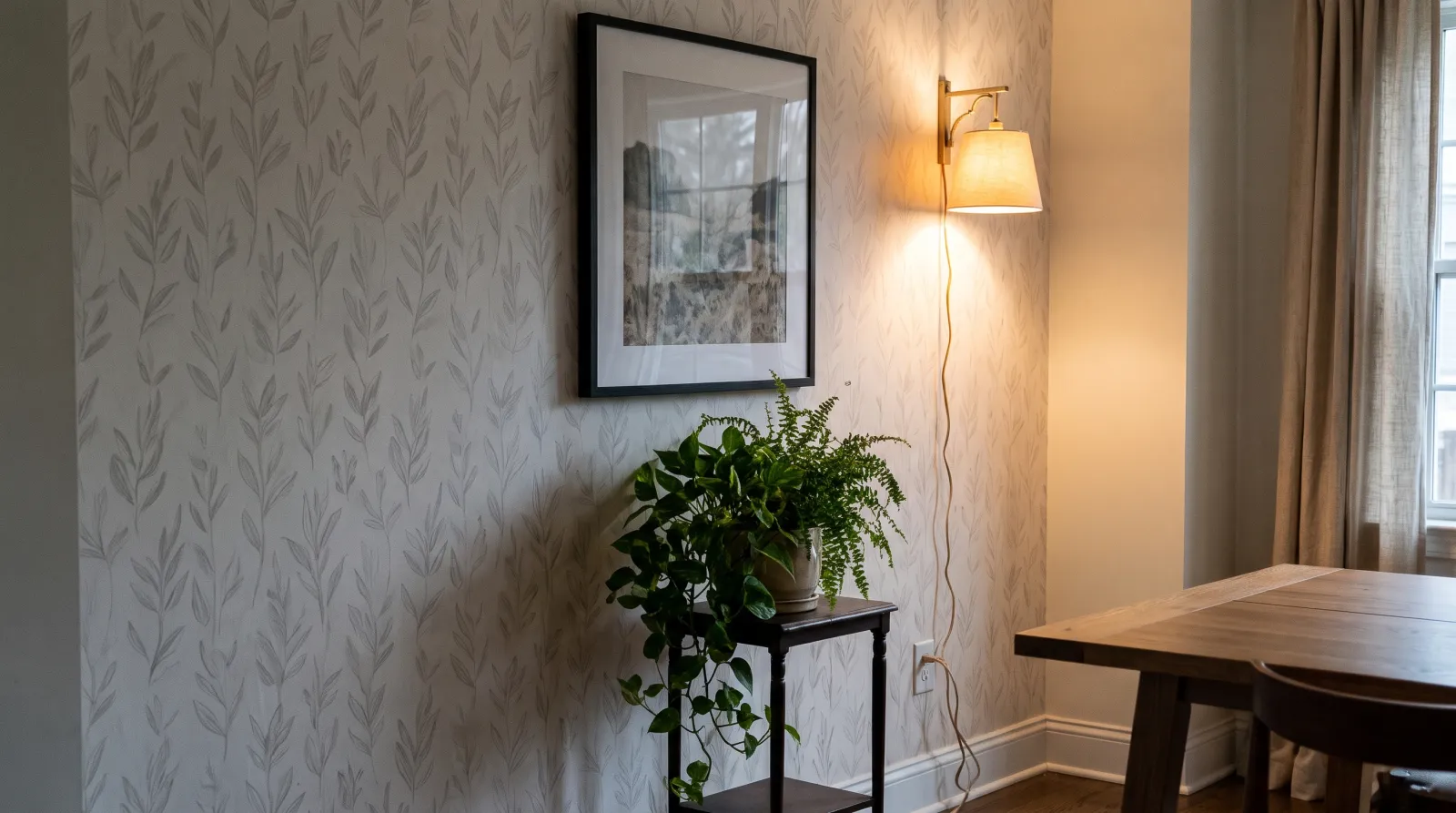
An empty wall can make a dining room feel unfinished, but you don’t need to spend a lot to fix it.
How do you decorate a dining room wall on a budget?
Hang a large piece of art or a mirror on the main wall, and keep the center of it at about 57 to 60 inches from the floor. That’s a widely used gallery guideline that puts art near eye level. One large piece usually looks more intentional than several small ones scattered around.
Other low-cost wall ideas include:
A mirror, which bounces light around and makes the room feel larger. Place it across from a window if you can.
A gallery wall using frames in the same color, with prints you download and print yourself.
Wall molding or board-and-batten built from basic trim, if you’re comfortable with a DIY project.
Peel-and-stick wallpaper on one wall, which is usually easier to remove in a rental than traditional wallpaper. Test a small piece first to be sure it won’t damage the paint.
A fresh coat of paint, which is often the least expensive big change in any room.
For renters, removable hooks and picture-hanging strips can hold lighter frames without nails, but check the weight limit on the package.
Create a Sideboard Moment
If you have a buffet, console, or narrow cabinet in the dining room, it’s a good place to show some personality. It also gives you a spot to store serving pieces and linens.
Keep the styling simple, with a few layered items of different heights:
A lamp or tall vase on one side
A stack of books or a small tray in the middle
A bowl or plant to balance the other end
Leave some empty space on the surface. A crowded sideboard looks busy, while a few well-placed items look styled.
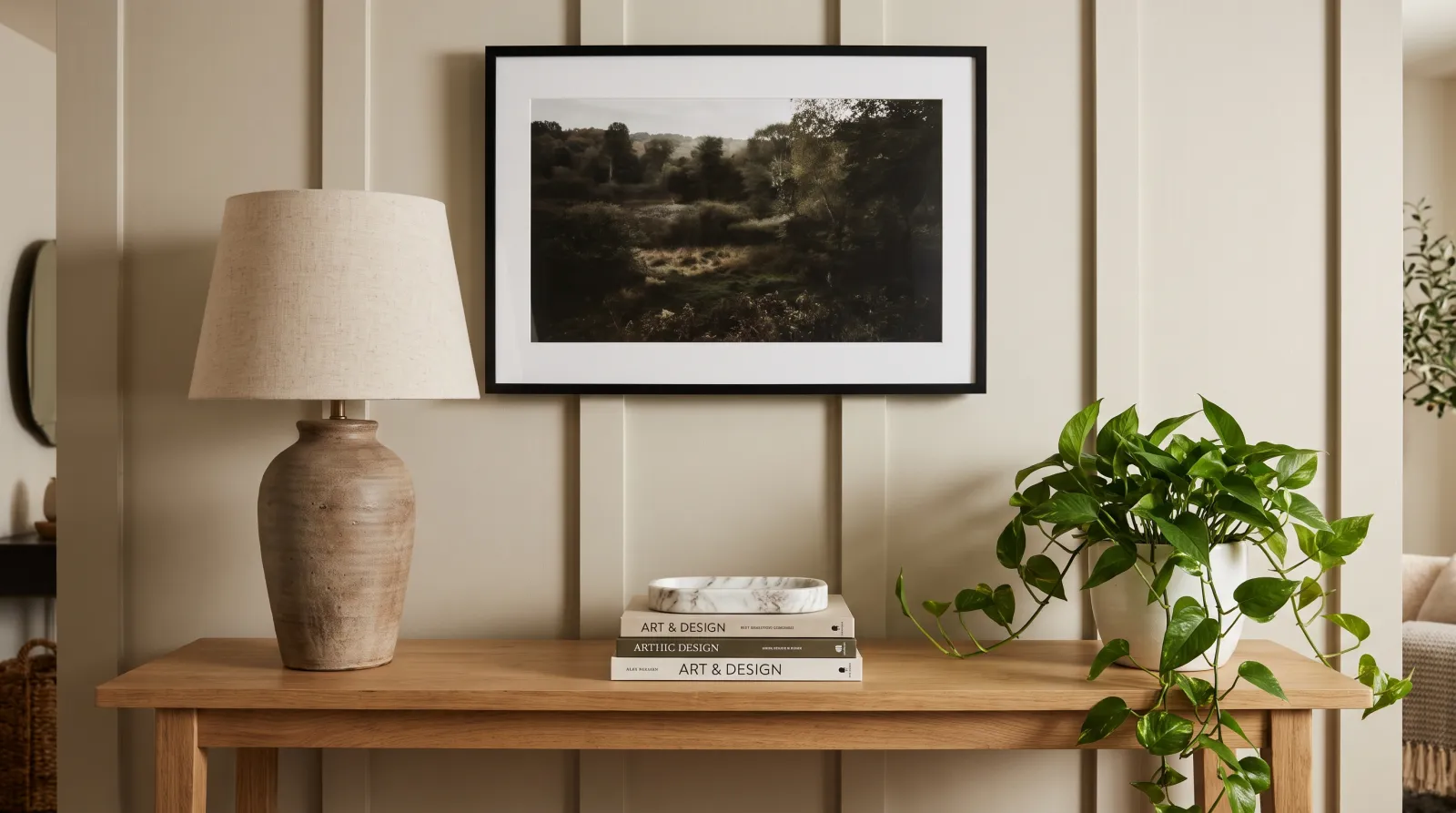
If you don’t have a sideboard, a narrow bookshelf or a console table can do the same job. Secondhand furniture is worth checking here, since a basic wood piece can be painted or given new hardware for a fresh look.
Add Texture and Greenery
Texture is what keeps a budget room from looking flat. Mix a few materials, like wood, linen, ceramic, woven baskets, and metal, so the room feels layered.
Plants help, too. Real or faux, a plant in the corner or on the sideboard brings in color and softens hard lines. Choose real plants that match your room’s light. Many common houseplants do well in bright, indirect light, so a spot near a window is a safe choice.
Where to Spend and Where to Save
If your budget is limited, this order tends to give you the most visible change for the money:
Lighting, because it changes the whole mood of the room
A properly sized rug, because it anchors the table
Paint or one styled wall, because it frames the room
Table linens and chair cushions, because they’re inexpensive and easy to swap
Accessories, which can come last and from thrift stores or secondhand sources
You can also save by shopping secondhand for vases, frames, trays, and candlesticks. Matching them with a coat of paint or a consistent color makes them look like a set.
Your Next Step
Pick one thing from this list and do it this week. If the room feels dark, start with lighting. If the table looks lost, start with the rug. Small changes build on each other, and a dining room that looks planned doesn’t have to cost a lot.
FAQs
How can I make my dining room look expensive on a budget?
Focus on cohesion. Stick to a limited color palette, upgrade the lighting, add a properly sized rug, and keep surfaces uncluttered. Repeating the same colors and materials across the room matters more than any single costly piece.
What is the cheapest way to update a dining room?
Paint and styling are usually the lowest-cost changes. A fresh wall color, a new table runner, chair cushions, and a few decor pieces can change the room without touching the furniture.
What size rug do I need for a dining room?
The rug should extend about 24 inches beyond the table on all sides so chairs remain on the rug when pulled out. Measure your table first, then add 48 inches to both the length and the width.
How high should a dining room light hang above the table?
A common guideline is 30 to 36 inches above the tabletop. Higher ceilings or larger fixtures may call for adjusting that, so check how it looks from a seated position.
What can I put on a dining table every day?
A low centerpiece works best, like a tray with a small plant or candles, or a bowl of seasonal items. Keep it short enough to see over and small enough that you can still set the table around it.
How do I decorate a dining room in a rental?
Use plug-in sconces, an area rug, removable wall hooks, peel-and-stick wallpaper (tested first), curtains, and freestanding pieces like a console or plant stand. These changes add style and come with you when you move.
Leave a comment
Share your thoughts or how you styled your space. Your email is never shown.