How to Decorate a Small Kitchen Without Making It Feel Cluttered
This post may contain affiliate links. We may earn a small commission at no extra cost to you. Read our disclosure.
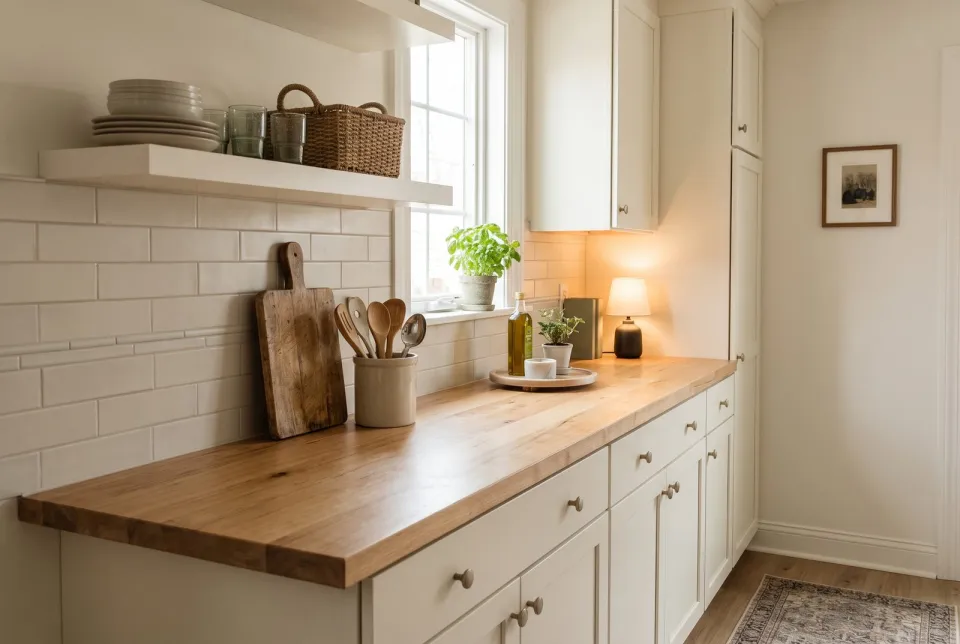
You want your small kitchen to feel like part of your home, not a storage closet with a stove. But every jar, print, and vase seems to steal space you need for cooking. If you’re wondering how to decorate a small kitchen without clutter, the answer comes down to three habits: decorate with things you already use, keep most surfaces clear, and add only a few pieces that earn their spot.
How do you decorate a small kitchen without it looking cluttered?
Clear your counters first, then add decor in small, deliberate groups. Choose items that are useful (like a cutting board or utensil crock), stick to two or three colors, and use walls and lighting for style instead of crowding the counters. A kitchen looks calmer when a few things are styled and everything else is put away.
The rest of this post breaks that down step by step.
Start by Clearing the Counters
Decorating a crowded kitchen just makes it more crowded. So before you buy anything, take everything off your counters and put back only what you use daily.
For most people, that’s a coffee maker, a cutting board, and maybe a knife block or a toaster. Everything else gets a new home in a cabinet, drawer, or pantry. Don’t worry if it feels bare. That empty space is what you’ll style with.
8 Ways to Decorate a Small Kitchen Without Clutter
1. Decorate With Things You Actually Use
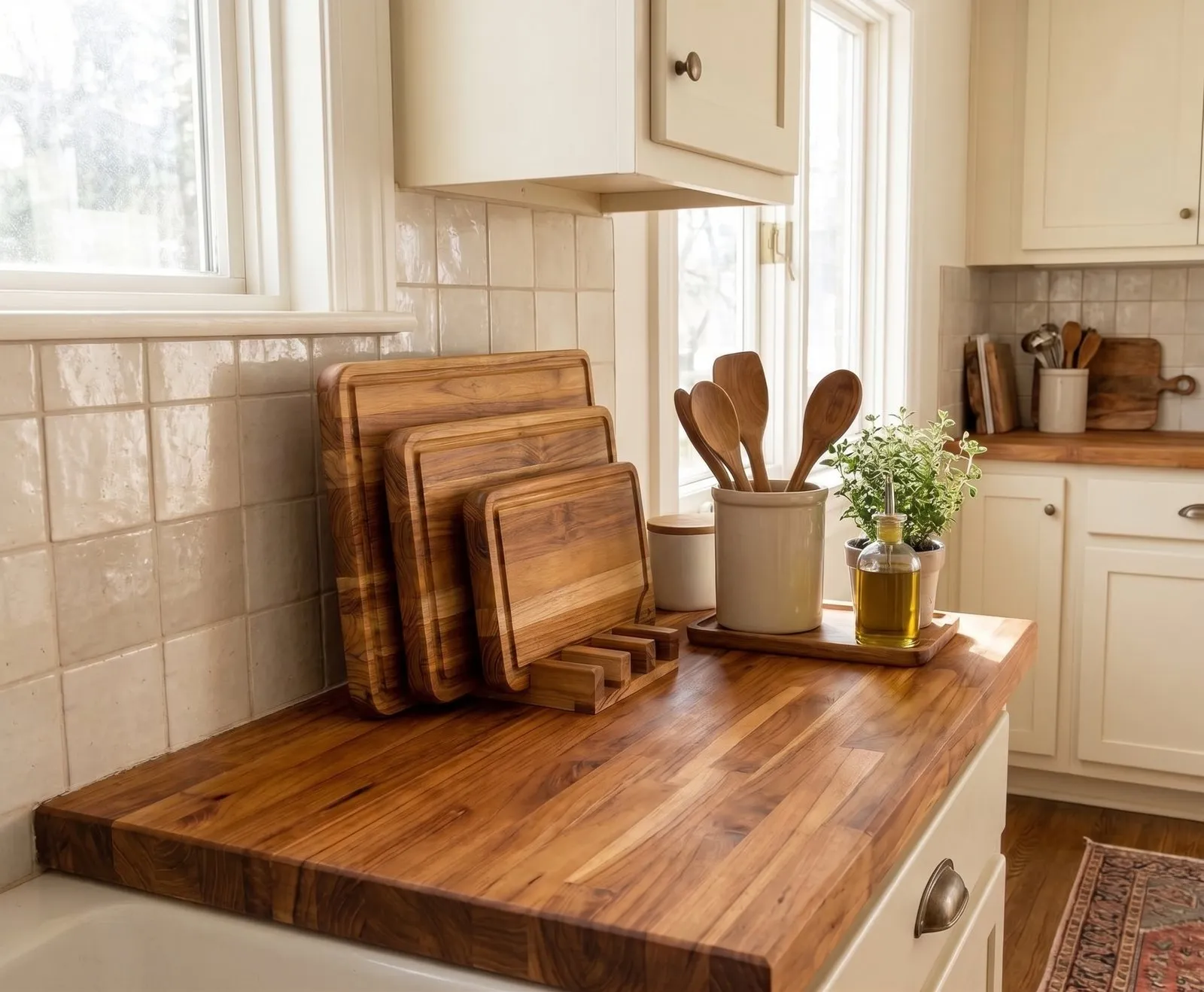
In a small kitchen, the best decor doubles as a tool. Think of a wooden cutting board leaning against the backsplash, a ceramic crock holding your spatulas, or a nice set of mixing bowls stacked on an open shelf.
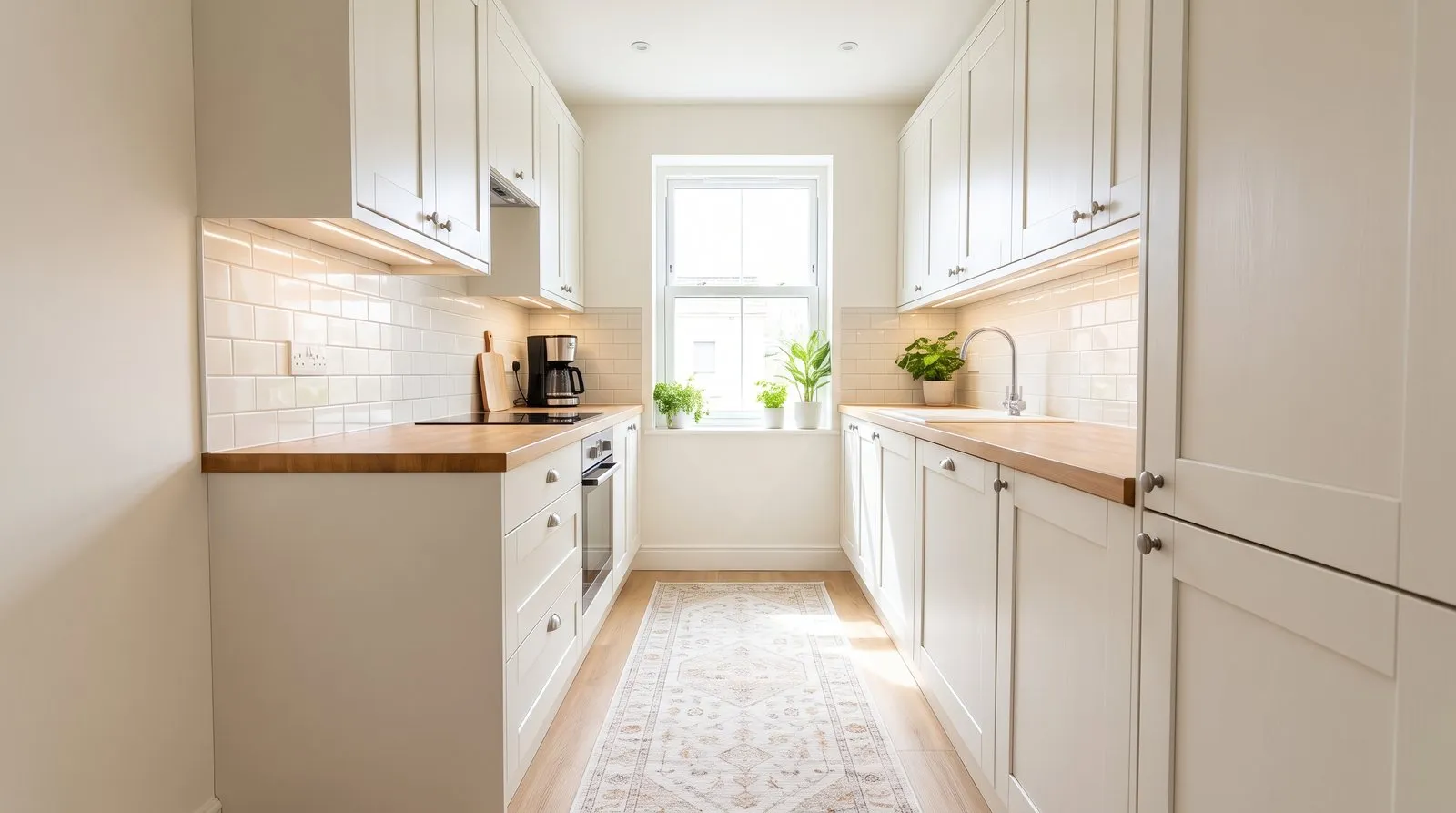
These pieces add texture and personality, and they don’t create extra stuff to dust around. If an item is purely decorative, ask whether it’s worth the counter space it takes.
2. Group Items on a Tray
Loose items scattered across a counter read as clutter. The same items on a small tray read as a styled moment.
Put your olive oil, salt, and a small plant on a tray near the stove. Because the tray defines the edge, the grouping looks intentional, and you can lift it off when you need to wipe the counter.
If you want a tray, look for one with a low rim and a size that fits your counter with a little space to spare. Wood, marble-look, and metal all work, though marble-look and light wood can stain, so check how easy the finish is to wipe clean.
3. Stick to Two or Three Colors
A small kitchen can handle a lot of pattern, but it gets busy fast when every item is a different color. Choose a base, one natural material , and one accent.
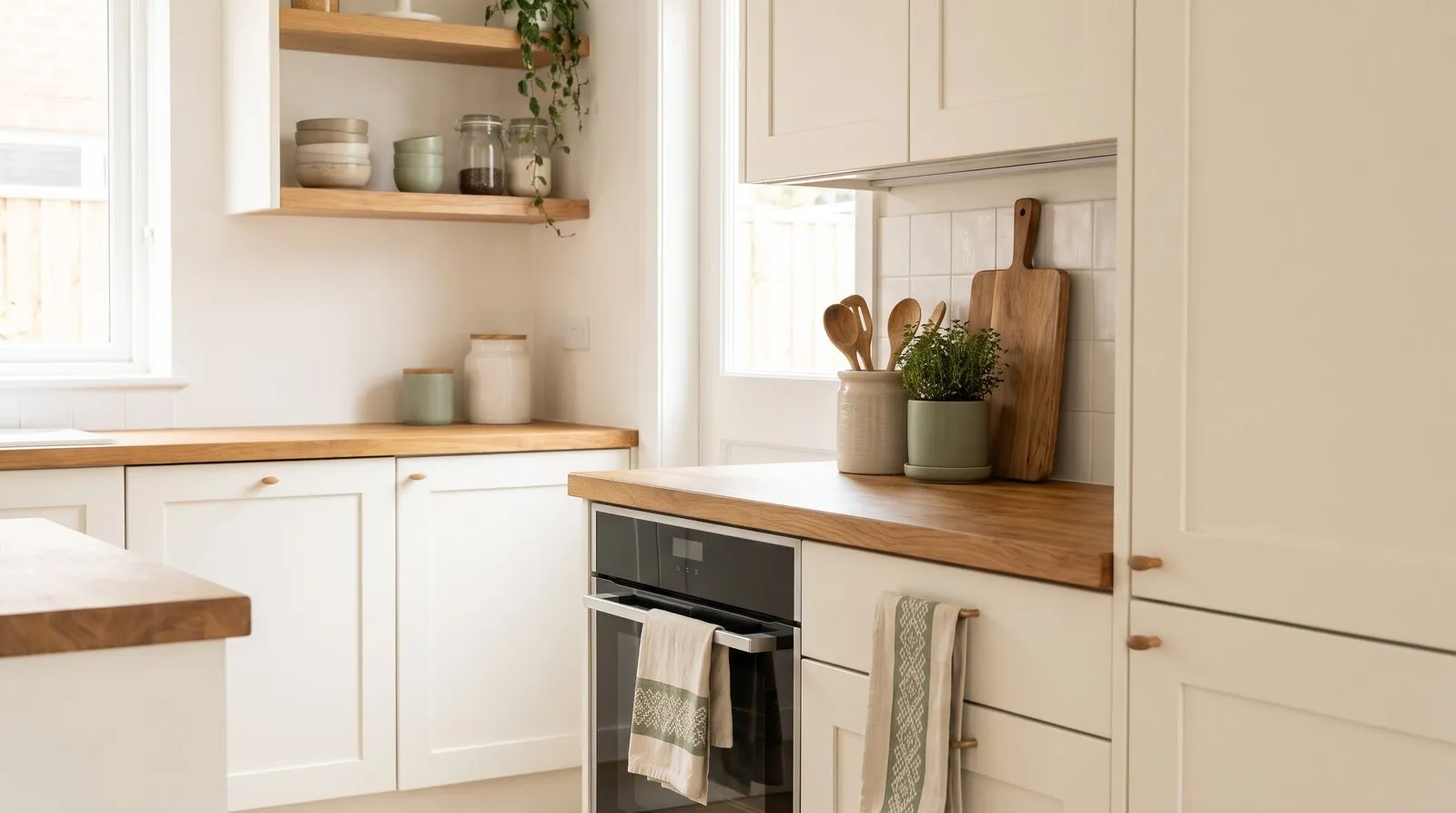
Repeat those colors in your dish towels, tray, bowls, and containers. Repetition makes a small space feel pulled together.
If you like matching containers for flour, sugar, and pasta, they can look tidy on an open shelf. Just keep in mind that decanting takes time, and some foods are better left in their original packaging, so only do it for items you use often.
4. Layer Your Lighting
Small kitchens often have one harsh ceiling light, which makes counters feel flat and cramped. Adding a second and third light source makes the room feel warmer and more finished.
Here are a few easy options:
- Under-cabinet LED strips or puck lights. Many are plug-in or battery-powered, so they work for renters. Check where your outlet is and plan how to tuck the cord out of sight.
- A small table lamp on a corner of the counter or a shelf, for evening light.
- Warmer bulbs in your existing fixture. Bulb packaging lists the color temperature, and lower numbers look warmer.
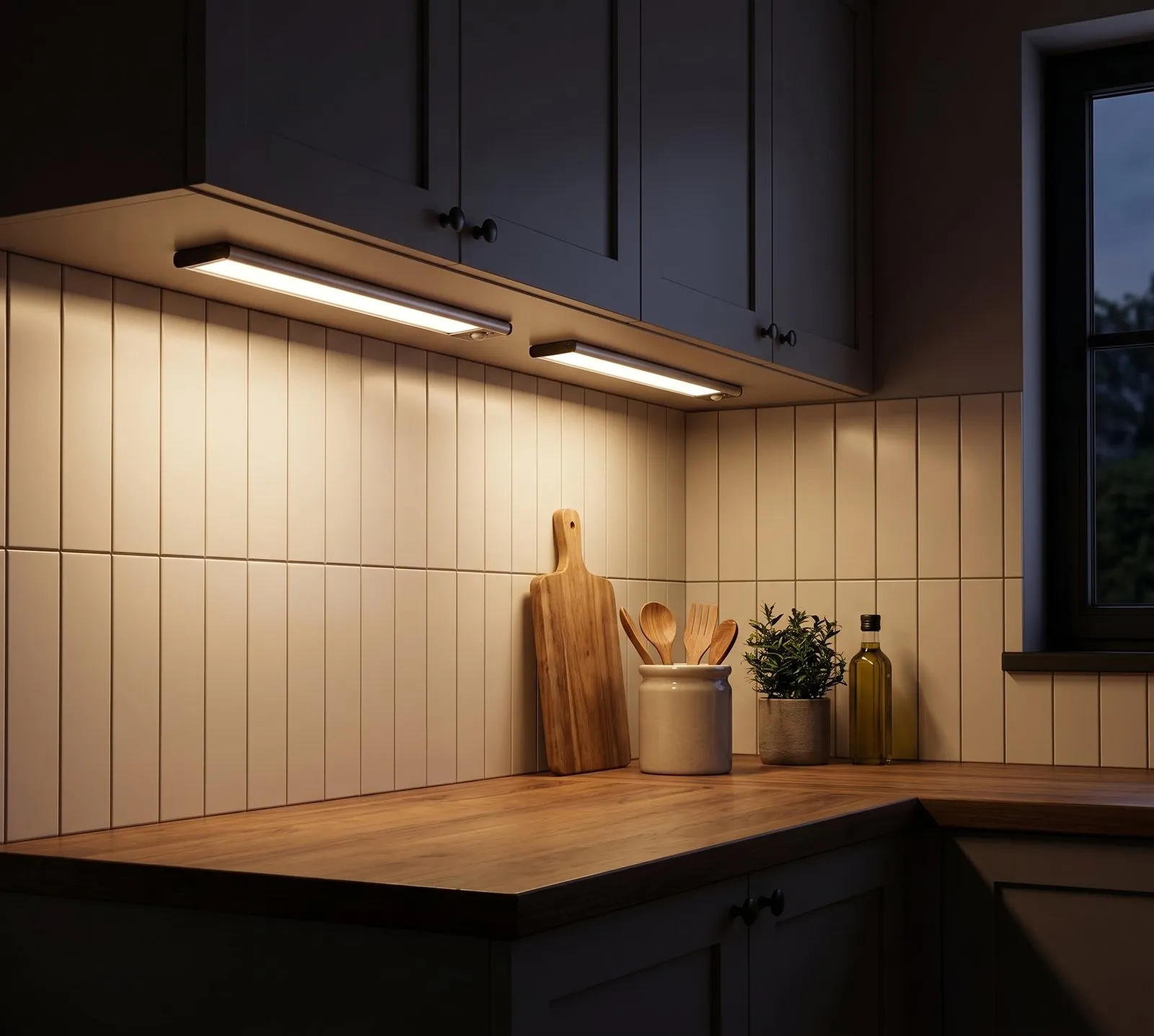
Better light makes everything look cleaner, which is a big help when the goal is a less cluttered feel.
5. Use Your Walls, but Leave Breathing Room
When counters are tight, walls are your best decorating surface. The catch is that a small kitchen can’t handle a full gallery wall without looking busy.
Pick one focal point. That could be a single framed print above the sink, a narrow shelf with a few items, or a rail with hooks for hanging mugs and utensils.
If you rent, adhesive hooks and picture-hanging strips can work well on smooth, clean walls. Check the weight limit on the package, and don’t hang heavy cookware from adhesive in a spot with steam or grease.
6. Add One Soft Layer
Hard surfaces dominate most kitchens, so a little softness helps the room feel welcoming. You don’t need much.
A runner rug in front of the sink or stove adds color and cushions your feet. Choose a washable one with a non-slip pad, and check the care label before you buy. Kitchens get spills.
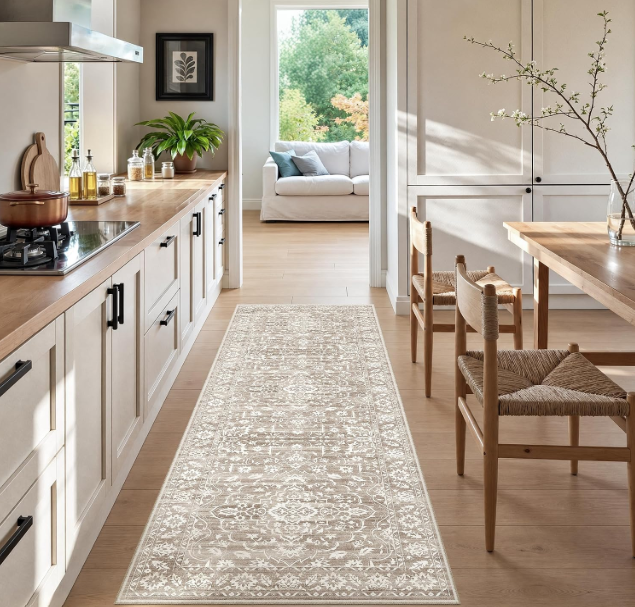
For the window, a short cafe curtain or a simple shade can soften the space without blocking light. Keep the fabric light and the length above the sink so it stays out of the way.
7. Bring in Something Living
A small pot of herbs on the windowsill or a single plant on an open shelf adds life and color without taking up much room. Basil, mint, and rosemary are common kitchen choices, but they need decent light, so a dark kitchen may do better with a hardy plant or a good faux option.
One or two plants is plenty. A whole row of pots starts to look like clutter again.
8. Make Storage Part of the Look
In a small kitchen, storage is decor. If you use open shelves, keep them edited: a short stack of plates, a few matching glasses, and one decorative item is usually enough.
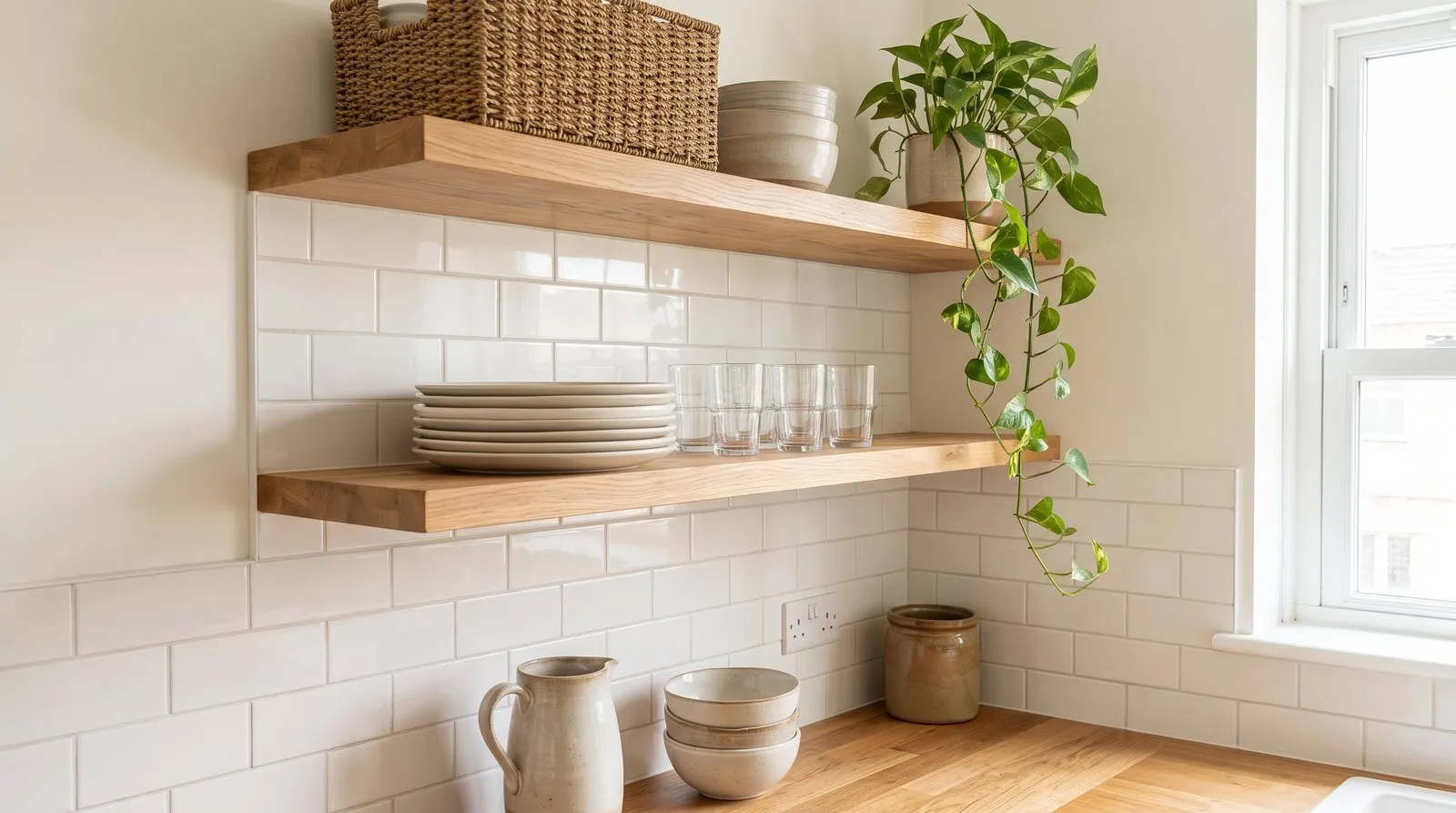
For everything else, closed storage keeps the visual noise down. Baskets on a shelf can hide odds and ends, and a few simple organizers inside cabinets or drawers help you put things away quickly, which is what keeps counters clear day to day.
Common Mistakes That Make a Small Kitchen Look Cluttered
- Decorating every surface. Leave some counters and shelves empty on purpose.
- Mixing too many colors and patterns. Pick a simple palette and repeat it.
- Using oversized decor. A big canister set or a large piece of wall art can overwhelm a small kitchen.
- Keeping items you don’t use. Duplicate gadgets and old mugs add up.
- Ignoring lighting. A dim kitchen feels smaller and messier, no matter how you style it.
A Simple Next Step
Try this tonight: clear your counters, put back only your daily items, and add one tray with three things on it. Live with that for a few days before you buy anything else. You’ll quickly see what the space needs, whether it’s better light, a rug, or one nice piece on the wall.
Small kitchens look best when every item has a job or a reason to be there. Start with less, add slowly, and let the room tell you what’s missing.
FAQs
How much should you keep on kitchen counters?
There’s no fixed number, but a good starting point is only what you use every day, plus one styled grouping. If you can’t wipe the whole counter in one pass without moving a lot of items, there’s probably too much out.
What can I put on small kitchen counters for decor?
Useful items look best: a cutting board, a utensil crock, a small plant, or a tray with oil and salt. Keep the grouping small and avoid purely decorative pieces that block your work space.
How can I make a small kitchen look bigger?
Better lighting, a limited color palette, and clear counters all help. Light, reflective finishes can also make the room feel more open, but only if surfaces stay uncluttered.
What are renter-friendly ways to decorate a small kitchen?
Use plug-in or battery under-cabinet lights, a washable runner rug, freestanding shelves, adhesive hooks (within their weight limits), and removable window treatments. Check your lease before making any changes to walls or fixtures.
Should I use open shelving in a small kitchen?
Open shelves can work if you keep them edited and use matching or coordinated items. If you tend to collect a lot of dishes and gadgets, closed cabinets or baskets will help the kitchen feel calmer.
What colors work best in a small kitchen?
Light, neutral bases like white, cream, and soft gray tend to feel open. Add one or two accents, such as wood tones, black, or a muted green, for warmth. It’s a style choice, so choose colors you enjoy looking at every day.
1 comment
Leave a comment
Share your thoughts or how you styled your space. Your email is never shown.
Muhammad Younis
nice