How Tall Is a Dining Room Table?
This post may contain affiliate links. We may earn a small commission at no extra cost to you. Read our disclosure.
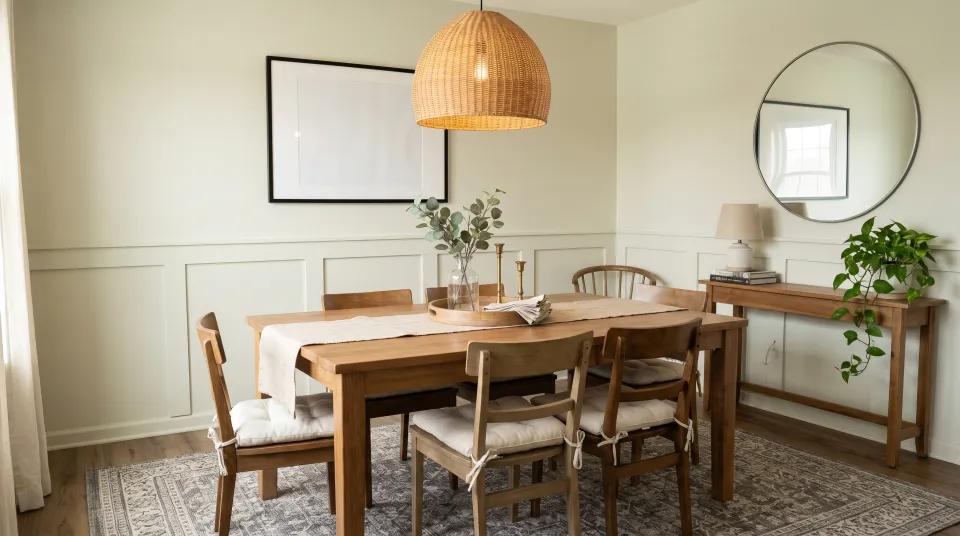
The standard dining room table stands 28 to 30 inches (71 to 76 cm) tall, measured from the floor to the top of the surface. Planner 5D notes that 30 inches is the number most furniture makers settle on. That answers how tall a dining room table is for most homes, though taller versions exist and they come with their own chairs.
The table height alone tells you very little. What decides whether dinner feels comfortable is the gap between the chair seat and the table, and that gap is where most buying mistakes happen.
Standard, counter and bar height side by side
Dining tables sold today fall into three height groups. The pairing column matters as much as the table column, so read both.
Type Table height Matching seat height Standard (dining)28 to 30 in (71 to 76 cm)17 to 20 in Counter 34 to 36 in (86 to 91 cm)24 to 26 in Bar 40 to 42 in (102 to 107 cm)28 to 30 in
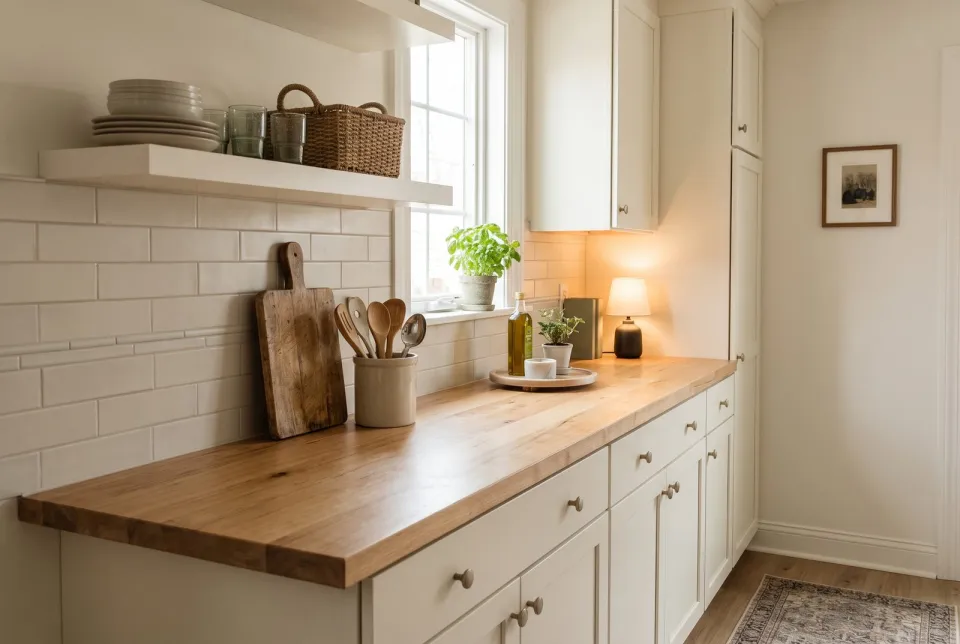
Counter height tables line up with kitchen counters. Sebring Design Build points out that cabinetry is built to those dimensions, which is why 36 inches is also the most common kitchen island height. Bar height is the tallest dining option and the most casual one, closer to a pub than a family dinner.
The 10 to 12 inch rule that actually matters
Almost every retailer and design guide lands on one number: about 10 to 12 inches between the top of the chair seat and the underside of the table. Castlery describes it as enough room to slide your legs under without feeling cramped. The same rule applies to counter and bar tables, only with taller seats.
The arithmetic is simple. A 30 inch table with an 18 inch seat leaves 12 inches. A 29 inch table with a 19 inch seat leaves 10. A 36 inch counter table with a 24 inch stool leaves 12, and a 42 inch bar table with a 30 inch stool does too.
Measure to the underside of the table, not the top. IKEA's dining chair guide says so directly, and it matters more than it sounds. A table with a deep apron or drawers beneath the surface can take a few inches off your legroom even when the height is perfectly standard, as Living Styles warns in its Australian guide.
Numbers shift a little depending on who you read. IKEA's table height guide gives 9 to 12 inches (24 to 30 cm). Sebring Design Build says 12 to 15 inches, but it measures from the seat to the tabletop, so its figure runs higher by design. Use 10 to 12 inches below the table as your working target.
Why some tables are 28 inches and others 31
Ask three furniture sites for the standard and you get three answers. Most say 28 to 30 inches. Chairish stretches it to 31. Seat heights drift too: 17 to 19 inches in some guides, 18 to 20 in others.
None of that is a contradiction. Makers build to a range, and what you're really matching is table height minus seat height. If you shop for a table and chairs separately, write down both numbers before you fall for either one.
Body height changes the picture as well. IKEA says a seat of 16 to 17 inches (40 to 42 cm) often suits people under 5'3" (160 cm). On a 30 inch table that leaves a gap beyond 12 inches.
A household with mixed heights should lean toward the lower end of standard, around 28 to 29 inches, and pick chairs with a modest seat height.
Is a counter height dining table worth it?
For a dedicated dining room, I'd stay with standard height. It has the widest choice of tables and chairs, and Star Furniture notes that most chairs are designed for it, so you aren't hunting for a match.
Counter height earns its place in a different setup. If the table sits in an open kitchen, a 36 inch surface lines up with the island and can make a small room feel more open, according to Stacy Furniture. The catch is who uses it. Pop Maison flags that the taller height can be hard on children, shorter adults and older adults. Climbing onto a stool twice a day gets old for a six year old.
Bar height is a living room or basement choice. It's fun for a game night and awkward for a Sunday roast.
Measure before you buy
You only need a tape measure and ten minutes.
Measure from the floor to the underside of the table (or the bottom of the apron, whichever is lower).
Measure the seat height of the chairs you own or plan to buy. Look for the words "seat height" in the product listing, since overall chair height is a different number.
Subtract. You want 10 to 12 inches.
Then check the room. IKEA suggests 30 to 36 inches (75 to 90 cm) of clearance around the table, and Castlery recommends at least 36 inches between the table edge and any wall or furniture. A table at the right height still fails if nobody can pull out a chair.
A thick seat cushion raises the seat and eats into the gap, so count it when you measure.
Ceilings and lighting
Height affects the room, too. James & James Furniture says an above-standard table can look out of place under a low ceiling. If you plan a pendant light over the table, Castlery suggests hanging it 30 to 36 inches (76 to 91 cm) above the surface. A counter or bar height table pushes that light closer to your head, so check the numbers before you order.
Quick answers
Is 30 inches too tall for a dining table? No. It's the most common height and works for most adults.
What chair height goes with a 30 inch table? Around 18 inches is the usual pairing, which leaves 12 inches of legroom, per Planner 5D.
Can I use regular dining chairs at a counter height table? No. A standard 18 inch seat under a 36 inch surface leaves 18 inches, and you'd be eating at chin height. Counter tables need 24 to 26 inch stools.
Before you order anything, measure the underside of your current table and subtract the seat height of your chairs. If the answer isn't between 10 and 12 inches, you know which one to change.

Leave a comment
Share your thoughts or how you styled your space. Your email is never shown.